Revs Explained: RPM, Redlines and Your Engine
What revs actually are, how torque and rpm make power, why some engines rev higher, and how to treat your motorcycle engine when cold, new or downshifting.
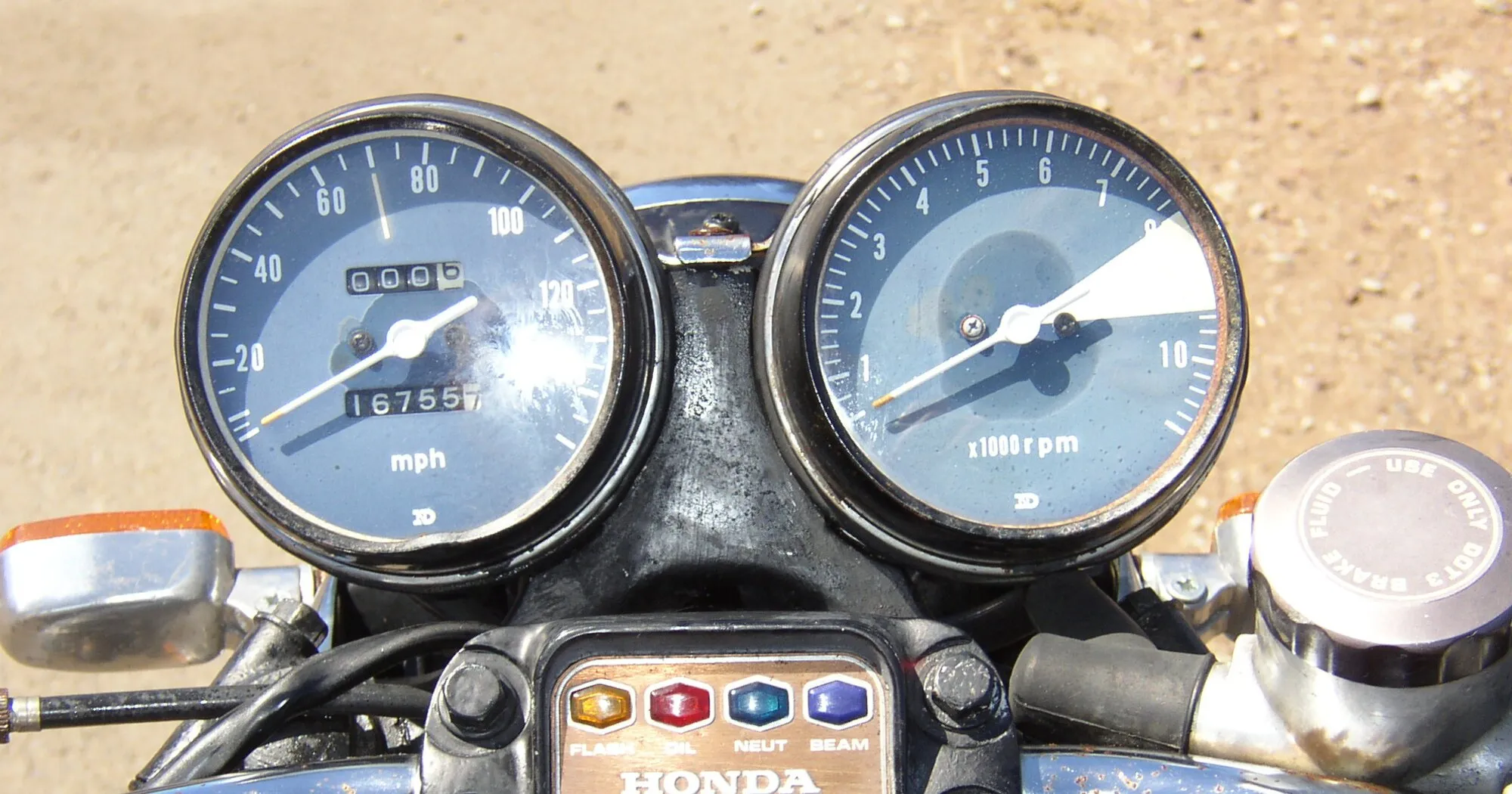
The needle on the right of your dash, the one marked “×1000 rpm”, tells you more about your engine’s health than any other gauge. Here’s what revs actually are, and how to use them well.
What “revs” means
Revs are revolutions per minute (rpm): how many times the crankshaft turns every minute. At 6,000 rpm it spins 100 times a second. In a four-stroke engine each cylinder fires once every two revolutions, so a twin at 6,000 rpm makes 6,000 power strokes a minute.
The tachometer (rev counter) shows it. The redline marks the highest speed the manufacturer considers safe for continuous use.
Torque, revs and power
Torque is the twisting force the engine makes. Power is how fast it makes it. They’re linked by revs:
Power (kW) = Torque (Nm) × rpm ÷ 9,549
So 100 Nm at 8,000 rpm is about 84 kW (114 PS). The same 100 Nm at 4,000 rpm is only half that. That’s why high-revving engines make big peak power from modest torque, and why a big twin can feel strong at low revs even with lower peak power.
For riding, the shape of the curve matters more than the peak. A flat torque curve means the bike pulls in almost any gear. A peaky engine rewards keeping the revs up.
Why some engines rev higher
It mostly comes down to the stroke, the distance the piston travels. A useful number is the mean piston speed:
Mean piston speed (m/s) = 2 × stroke (m) × rpm ÷ 60
Compare two current Hondas:
- The CB1000F’s four has a short 55.1 mm stroke. At 11,000 rpm its pistons average about 20 m/s.
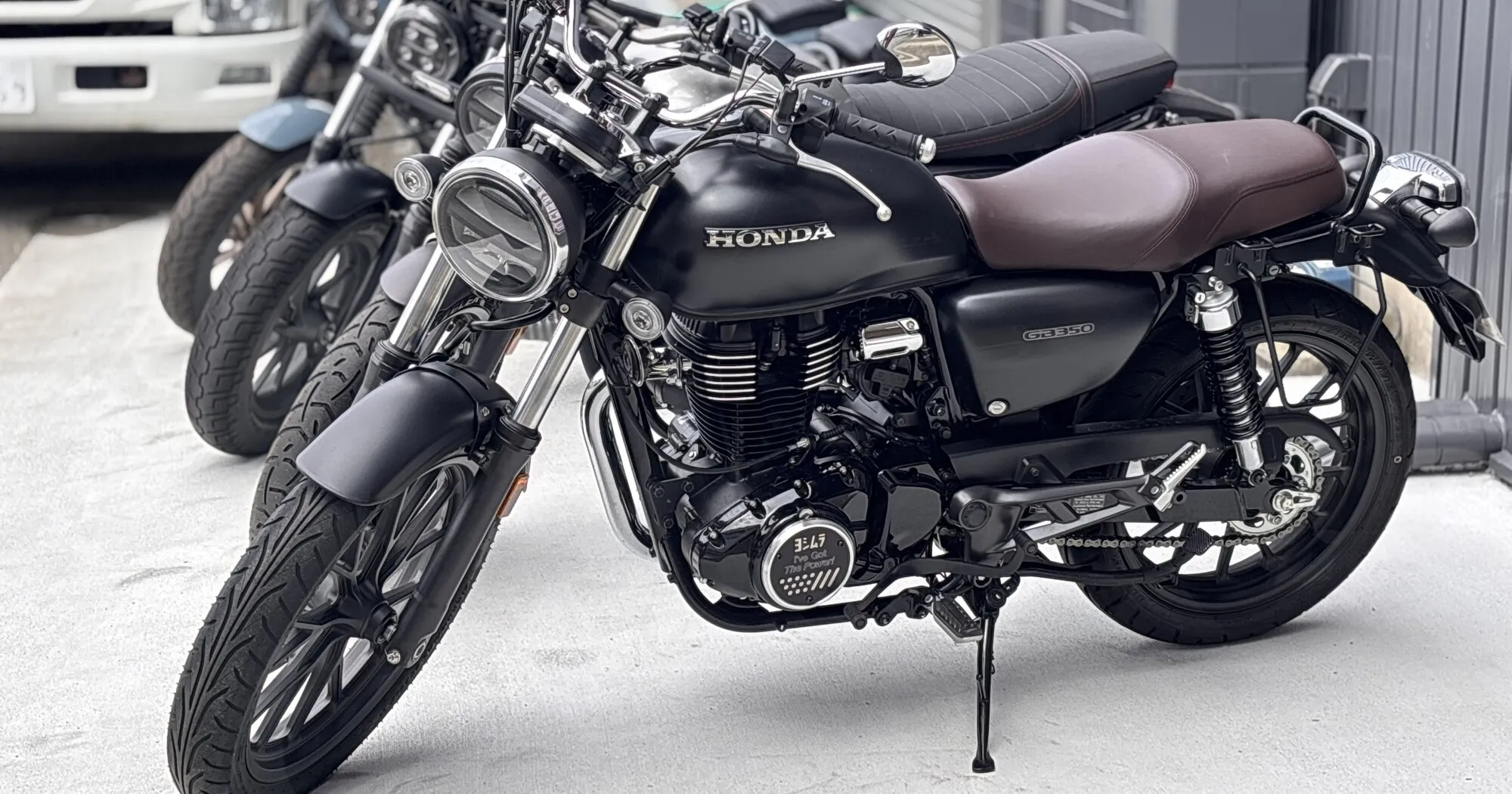
- The GB350 S single has a long 90.5 mm stroke. It would reach about 18 m/s at just 6,000 rpm.
The long-stroke single hits similar piston speeds at roughly half the revs. That’s why it’s built for low-down torque (29 Nm), while the short-stroke four is built to rev. Lighter valvetrain parts, more valves and smaller cylinders all help an engine rev higher too.
Redline and rev limiter
Modern bikes protect themselves with a rev limiter. At the limit, the engine management cuts fuel or ignition, and you feel the bike stutter. Bouncing off it occasionally won’t hurt a healthy engine. It isn’t a riding style, though: power usually peaks before the limiter, so it’s normally faster to shift earlier.
There’s one thing the limiter can’t prevent: a missed downshift. If you drop two gears instead of one at speed, the rear wheel drives the engine past its limit mechanically. That’s the classic way to bend valves. Shift down deliberately, one gear at a time, and let the revs settle.
Cold engines: be gentle
Coolant warms up in a few minutes. Oil takes longer, and oil is what protects bearings and cams at high revs. Many bikes have no oil temperature gauge, so give it the first several kilometres at moderate revs and light throttle before you use the top of the rev range.
New engines: vary the revs
Running-in rules differ by manufacturer. Many specify a lower rev ceiling for roughly the first 1,000 km, plus a first service around then. The common advice:
- Vary the revs. Avoid long stretches at constant rpm, like motorway cruising.
- Avoid full throttle and the top of the rev range.
- Don’t lug it. Low revs under heavy load stress the engine.
Your owner’s manual wins over any general advice. Don’t skip the first service either: it’s when the first oil, full of fine running-in particles, comes out.
Don’t lug it, ever
Riding too high a gear at too low revs, then opening the throttle, is called lugging. The bike shudders, the chain snatches and the engine knocks. Fuel injection hides it better than carburettors did, but it still loads the bearings and drivetrain. Drop a gear, and let the engine work where it’s happy.
Downshifting smoothly
On older bikes, a quick blip of the throttle while the clutch is in matches engine speed to road speed, so the rear wheel doesn’t chirp. Many modern bikes do this for you: a slipper clutch softens the shock, and an up/down quickshifter blips automatically. Either way, smooth downshifts are easier on the chain, the tyre and your nerves.
Revs and maintenance
Engines that live high in the rev range wear certain parts faster, especially valve clearances, chains and oil. That’s why manufacturers give service intervals in kilometres: every kilometre is thousands of revolutions.
Tracking those intervals is exactly what NakedRevs does. Log your kilometres and it tells you before the next oil change or valve check is due.
Read next: A short history of the naked bike